
Inspiration
Just some inspiration pictures found on the web over the last few months...
Just some inspiration pictures found on the web over the last few months...
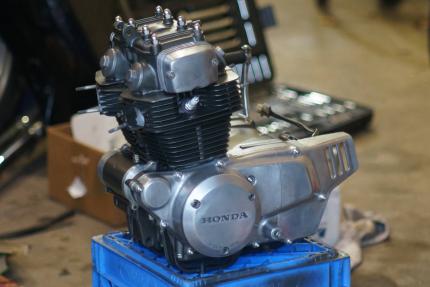
Coming off a fresh engine rebuild for my vintage scrambler motorcycle, I thought I'd share how I did it. Step by step.
Zen and the Art of Motorcycle Maintenance is not one of the books where you say "Well, that was a good book.." after finishing it. No, it's the type of book that you hold for a little while after finishing the last page as your mind is racing to comprehend the magnitude of what has just been delivered to it. Followed by flipping through the pages to find a note in the margins or an unread prologue or afterword that could possibly add some explanation. Followed by more thinking.
I set off to create a background image for a website I'm making for a friend who wants to host his pod casts about the band Nine Inch Nails. I came up with a good idea, after finding some inspiration, but I needed to create it myself pixel-by-pixel to get the resolution I needed. What fallowed was an experiment with fog and light effects, and the end result came out pretty good!

I wrote this function because one of our web apps that was communicating with our web server suddenly began receiving Error 406: Not Acceptable (The requested resource is only capable of generating content not acceptable according to the Accept headers sent in the request). So I inserted this bit of code to capture exactly what that accept header was and see if we could fix the problem. It writes the output to a file on the webserver.
 This is a skin for the JQuery plugin JPlayer I developed for Kansas Public Radio. It's designed to look like a display screen on a piece of professional audio equipment. You can view it live here: http://kansaspublicradio.org/KPRplayer.php?stream=1.
I bought a Nikon J1 mirror-less camera to use with my old manual focus lenses. This review will focus on the camera's ability to use old manual focus lenses. I'll explain how well the camera body pairs up with lenses, and if they're easy to use with it. Long story short: they're not. And here's why... 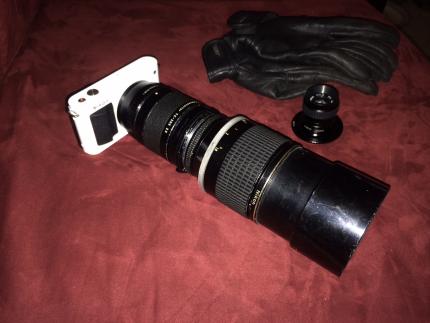
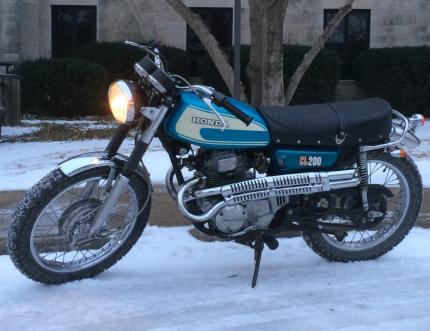
I love my 1974 Honda CL200, but some features are just... dorky. And what they're doing in Japan with old Hondas and Yamahas inspired me to do the same with mine. So what started off as a mild, stock-ish restoration project, began to steer in the direction of darkness when I decided to add some bratstyle/tracker styling cues. One thing led to another, and the next thing I find myself doing is bobbing the rear fender.
I'm no expert in automotive body repair, just an amateur with a camera and a desire to do things my way. Sure, I could take it to a pro, but I like the idea of learning how to do things myself, which provides me with confidence and gusto. Or I could try to find one on ebay, but they're so rare these days that it will cost a gigabuck and it's likely to be just a cracked, brittle, and broken. What fallows is my attempt at repairing them with a few supplies from the hardware store and willingness to learn and take risks. 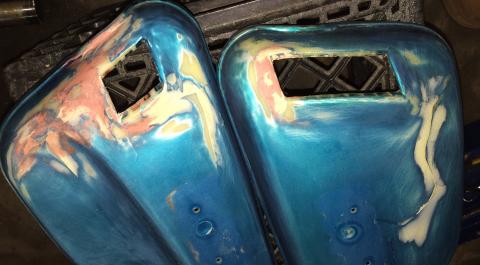
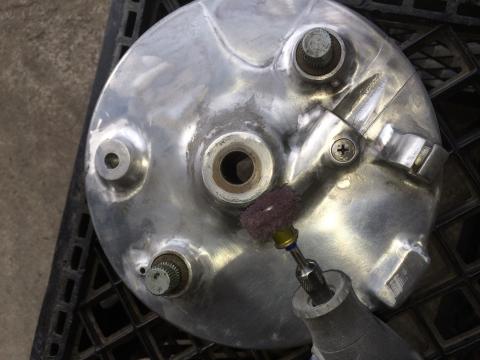
While restoring my CL200, all the aluminum had to be refinished: the engine side covers, wheel hubs, and fork tubes. Honda originaly covered them in a clear coat to protect from oxidation, but over the years that clear coat turned yellow, and any scratches and nicks allowed oxidation to creep in and crawl around. The result was a very ugly, very tarnished surface. Here's how I cleaned them up.
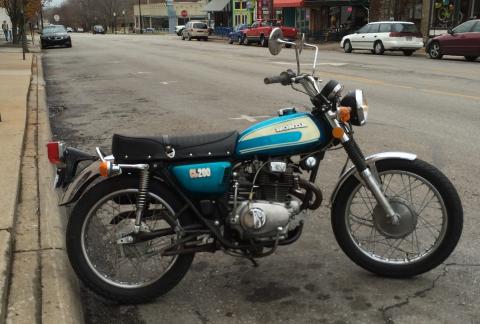
For as long as I can remember, I've had my eyes peeled for a sweet old motorcycle. Not a Harley, not a crotchrocket, just a nice, standard motorcycle. And from the 60s or 70s. Well, I think I finally found her: a 1974 Honda CL200 Scrambler. Turns out it's a rare bird–it's the much less popular, "scrambler" twin to the CB200. 1974 was actually the only year they made them! It features high pipes for better off-road clearance, the moto-style bars, and off-road styling cues. I dig it!

I built a perfect, beautiful, wonderful website using the Drupal CMS, Amason S3 and CloudFront for Atipa Technologies. Everything worked flawlessly and looked amazing. After I left the company, they decided to duplicated the work of a real web developer with one of those WYSWYG website editor (Adobe Muse by the looks of the source code). The result, as you can see, is pitiful. An uninspired child could make a better website than that. For shame...
This article is an abridged version of the presentation I gave at the Texas Advanced Computing Center, which was the motivation for creating a web app in the first place–one that went on to become suitpicker.com.
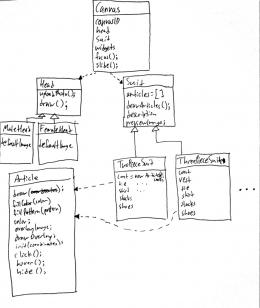
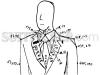
A few months ago while thinking about purchasing a new suit, I was looking for some sort of website that would let me mix and match different colors and patterns and see how they would look. There was no website like that. So I decided to build me own! Suitpicker.com helps you find the best color combination to choose that perfect suit you've been looking for. It provides a way to test ideas before trying them out at the store.
Not too long ago, a parody Twitter account went viral and had us all laughing. Lately though, it's gotten a little stale. Here are a few Modern Seinfeld plot lines of my own, in 150 chars or less.
My article on wikiHow, How to Build a Supercomputer must have struck the right chord–it's been read over 50,000 times as of writing this. The hardware part is easy, if you have the cash. The software part, however, requires much more know-how and experience. Many of the tuning tricks–such as turning off IGMP snooping to reduce overhead in the switches, and using an 8x8GB memory configuration (as opposed to 4x16GB) to reduce the latency/bandwidth bottleneck of Piledriver CPUs–are crucial to making the investment worth the money.
Step 1: Start off with something ambiguous.
Beautiful is better than ugly / Explicit is better than implicit / Simple is better than complex / Complex is better than complicated – The Zen of Python
Step 2: Now decide what it is you're writing about.
So you want to learn Python? Here's how...
This program tests the efficiency of several sorting algorithms, including bubbleSort, insertionSort, mergeSort, quickSort, and selectionSort. It can sort any size of array from size 10 to size 10 million, and in either ascending, descending, or random order. The purpose is to find the time it took to search the array for research purposes.